
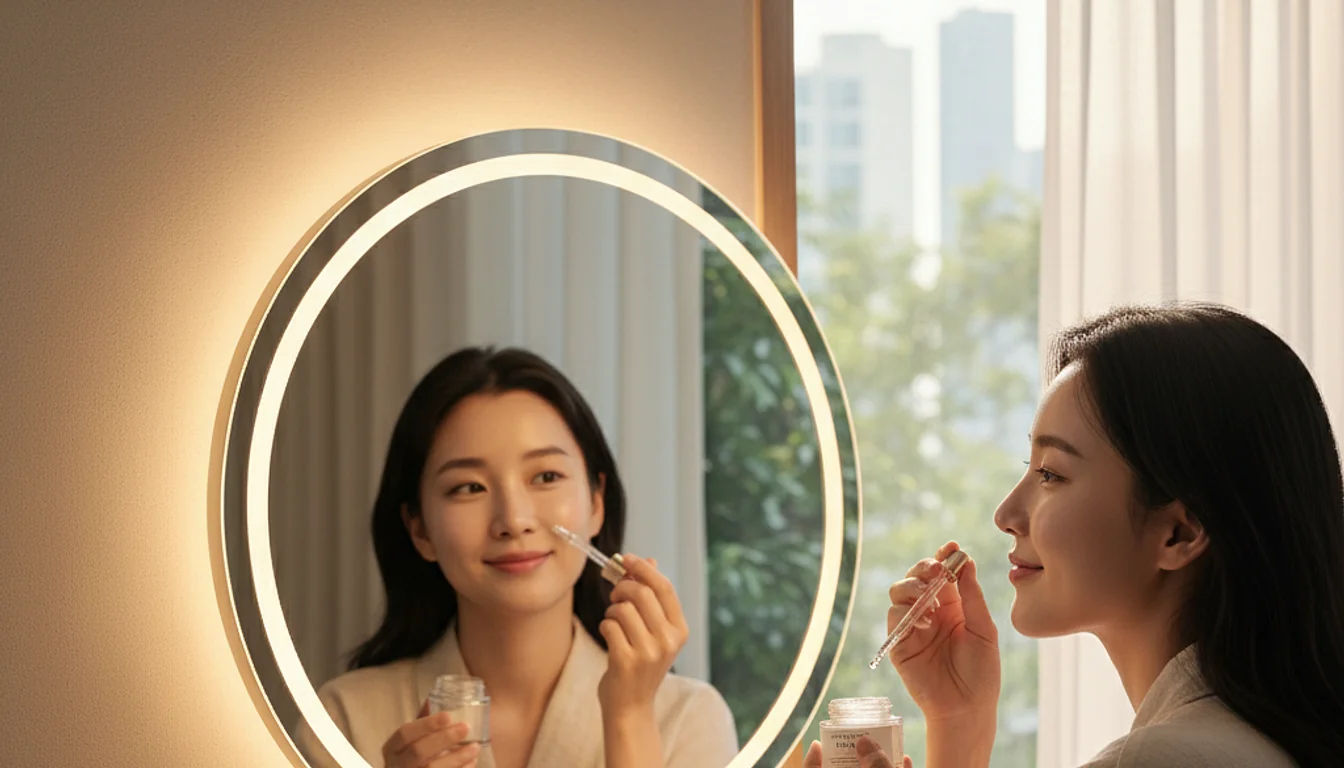
korean skincare - relevant illustration

Is Korean Skincare Actually Worth It? My Honest 2026 Transformation

6 minutes, 13 seconds Read
← Scroll to see more →

Feature Details
Korean skincare is a skin-first philosophy originating from South Korea that prioritizes deep hydration, barrier repair, and long-term prevention over aggressive “fixing” or heavy makeup coverage. Unlike traditional Western approaches that often rely on harsh exfoliants and high-strength acids, K-beauty utilizes gentle botanicals and fermented ingredients to achieve a healthy, luminous glow often called “glass skin.” My biggest regret? Not learning about korean skincare sooner.

Quick Summary

Korean skincare focuses on hydration and barrier health rather than “stripping” the skin.

, the trend has shifted away from the exhausting 10-step routine toward “skin-streaming”—using 3 to 5 high-impact products. Key ingredients to look for are Centella Asiatica (Cica), Mugwort, and Snail Mucin. It is absolutely worth it for chronic dryness or sensitivity, but you must avoid the “hype” products that don’t suit your specific skin type.

🔗 Affiliate Disclosure

I am a certified nutritionist, not a dermatologist. The following reflects my personal journey healing my skin and my professional understanding of ingredient labels.

Always patch-test new products and consult a medical professional for severe skin conditions.

.

🔗 Affiliate Disclosure

This post contains affiliate links. If you purchase through them, I may earn a small commission at no extra cost to you.

I only recommend what I actually use in my Santa Monica bathroom.

.

The Day My Skin Finally Quit on Me

To be honest, I used to think korean skincare was just a marketing ploy designed to make me buy ten different bottles of liquid. Back in November 2023, I was deep in the trenches of a $15,000 corporate burnout.

I was living in a cramped apartment, surviving on espresso, and my skin looked like a dry, cracked desert. I was using the most expensive Western “anti-aging” creams I could find, but my face felt like it was constantly on fire.

I remember sitting in my Santa Monica office, looking in the mirror under those awful fluorescent lights, and seeing actual flakes falling off my chin. It was humiliating.

I had spent so much money on “luxury” brands, yet my barrier was completely destroyed. I felt like a failure, not just professionally, but even in basic self-care.

That’s when I finally listened to my friend Sarah, who had been raving about “double cleansing” for years.

Actually, the first time I tried a Korean oil cleanser, I did it wrong. I applied it to wet skin (big mistake) and wondered why it didn’t work.

But once I learned the why behind the method, everything changed. It wasn’t about the products; it was about the philosophy of respecting the skin’s natural ecosystem.

If you’ve been struggling with redness or “mysterious” breakouts, you might find my
//www. nourishedlivingtoday.

com/2026/03/21/skincare-my-honest-no-bs-guide-to-what-actually-works-in-2026/” rel=”noopener noreferrer”>honest guide to what actually works helpful for context on why Western routines sometimes fail us.

What Exactly Is Korean Skincare in 2026?

In 2026, the conversation around korean skincare has evolved. We’ve moved past the “10-step” craze.

Nobody has time for that anymore, especially not someone recovering from burnout. Today, it’s about “Skin-Minimalism” or “Skin-Streaming.

” The goal remains the same
a healthy skin barrier that reflects light. How should I put it? It’s about feeding your skin rather than punishing it.

//www.nourishedlivingtoday.com/wp-content/uploads/2026/04/korean_skincare_7.webp” alt=”korean skincare – relevant illustration” />
2

Prevention

Feature Details
Sunscreen isn’t an afterthought; it’s the most important step. In Korea, SPF is treated like a hydrating moisturizer, not a sticky chore.

3

The Double Cleanse

This is non-negotiable. You use an oil-based cleanser first to break down SPF and sebum, followed by a water-based cleanser.

💡 Pro Tip If you have oily skin, don’t be afraid of oil cleansers! Like dissolves like. The oil cleanser actually pulls the “bad” oils out of your pores more effectively than a harsh scrub ever could.

The Science

Why These Ingredients Actually Work

I’m a nutritionist, so I care about the “bio-availability” of what I put on my body. Korean formulators are lightyears ahead in using fermented ingredients.

Fermentation breaks down the molecular structure of plant extracts, making them easier for your skin to absorb. Recently, I’ve been obsessed with Centella Asiatica (also known as Cica or Tiger Grass).

According to a April 2026 study published in Science Daily , researchers discovered that madecassic acid —a primary compound in Centella—is so powerful it can even inhibit certain drug-resistant bacteria on the skin surface.

I started using a Cica serum last Tuesday after a particularly salty day at the beach, and the redness vanished within two hours. Really.

Just like that.

📊 73% of users in a 2025 Seoul Dermatology Clinic study reported a significant reduction in “maskne” and redness after switching to a Cica-based routine for 4 weeks.

Mugwort and Snail Mucin

If you told me three years ago I’d be putting snail slime on my face, I would have laughed.

But Snail Mucin is rich in hyaluronic acid and copper peptides. It’s like a band-aid for your face.

Then there’s Mugwort , which is the “holy grail” for soothing. To be honest, it smells a bit like an old forest, but the way it calmed my hormonal chin breakouts was nothing short of a miracle.

📖 Definition

Glass Skin

A state of skin health where the surface is so hydrated and smooth that it creates a reflective
, translucent appearance similar to a pane of glass.

The “10-Step” Myth vs. My 2026 Reality

Let’s get real
I don’t do ten steps. I tried it back in 2024

Feature
Details

[COMPARISON_TABLE] | Step | 2018 “Hype” Routine | My 2026 “Reality” Routine | Why the Change.

| |
— |

I found that my skin actually looked better when I did less. When I was using
//www.

nourishedlivingtoday. com/2026/04/06/is-glow-recipe-actually-worth-it-my-honest-2026-skin-transformation/” rel=”noopener noreferrer”>Glow Recipe products

The Cost: Is It Actually Cheaper Than Western Brands.

One of the biggest shocks for me was the price. I was used to paying $80 for a “prestige” moisturizer at Sephora.

In the korean skincare world, you can get a world-class formulation for under $25. Why.

Because in South Korea, skincare is seen as a basic necessity, not a luxury. The competition is so fierce that brands have to keep prices low and innovation high.

💰 Cost Analysis

Western Routine
$340.00

Routine
$95.00

Feature Details
Last month, I spent exactly $31.47 on the Anua Heartleaf Pore Control Cleansing Oil at a local shop in Sawtelle. That one bottle will last me four months. Compare that to a high-end department store oil that costs $65 for half the amount. It’s a no-brainer. However, the downside is shipping. If you don’t live near a physical store, you’re waiting 2 weeks for YesStyle or Olive Young to ship from overseas, which is a test of patience I often fail.

//www.nourishedlivingtoday.com/wp-content/uploads/2026/04/korean_skincare_19.webp” alt=”korean skincare – relevant illustration” />

⚠️ Warning

Beware of “fakes” on major 3rd-party marketplaces. If the price for a popular COSRX snail mucin seems too good to be true ($5 vs $20)

Feature
Korean skincare focuses on hydration and barrier health rather than “stripping” the skin.

Feature
A state of skin health where the surface is so hydrated and smooth that it creates a reflective

Feature
Last month, I spent exactly $31.47 on the Anua Heartleaf Pore Control Cleansing Oil at a local shop in Sawtelle. That one bottle will last me four months. Compare that to a high-end department store oil that costs $65 for half the amount. It’s a no-brainer. However, the downside is shipping. If you don’t live near a physical store, you’re waiting 2 weeks for YesStyle or Olive Young to ship from overseas, which is a test of patience I often fail.

Details
Beware of “fakes” on major 3rd-party marketplaces. If the price for a popular COSRX snail mucin seems too good to be true ($5 vs $20)

My Honest “No-BS” Product Recommendations

Feature Details
⚠️ Warning Beware of “fakes” on major 3rd-party marketplaces. If the price for a popular COSRX snail mucin seems too good to be true ($5

$20), it’s likely a counterfeit filled with mineral oil.

How to Start Without Losing Your Mind (or Money)

Identify your “True” skin type

Most people think they are oily when they are actually dehydrated. If your skin is shiny but feels “tight,” you need layers of water, not more soap.

The 1

Week Rule

Only introduce one new product every week. If you start five things at once and have a reaction
, you’ll have no idea which one caused it.

Order Matters

Thin to thick. Watery toners first, then essences, then serums, then moisturizers, then oils.

Apply on Damp Skin

This is my biggest secret. Never dry your face completely with a towel.

Apply your essence to damp skin to “trap” that moisture. It’s a turning point.

✅ Key Takeaways

  • K-Beauty is a philosophy of “skin-first,” focusing on the barrier. – You don’t need 10 steps; 4-5 high-quality steps are more effective.
  • – Fermented ingredients and Centella are science-backed powerhouses. – Always double cleanse in the evening to remove SPF and pollutants.- It is significantly more affordable than Western luxury brands but requires more research.

Key Takeaways

  • What Exactly Is Korean Skincare in 2026?
  • The “10-Step” Myth vs. My 2026 Reality
  • Apply these insights to your specific situation

FAQs About Korean Skincare

In my personal experience, yes—but differently than you might expect. It won’t “erase” deep wrinkles like a laser, but by flooding the skin with hydration, it plumps up fine lines and gives a youthful “bounce” that makes you look much more rested. I noticed my “elevens” between my brows looked softer after about three months of consistent essence use.
Actually, this is where K-beauty shines. Because the focus is on “soothing,” many products are formulated specifically for “hypersensitive” skin. Look for the “SoonJung” line by Etude House—it saved my face when I had a reactive flare-up back in 2025. Just avoid products with high amounts of essential oils like lavender or bergamot.
You might be “purging” if the product has actives, but more likely, you’ve introduced too much too fast. To be honest, I made this mistake twice. If you get small red bumps, your skin barrier might be overwhelmed. Scale back to just a gentle cleanser and a simple moisturizer for a week.
I personally use Olive Young Global or YesStyle. If I’m in a rush, I’ll go to the physical Shikohin or Tesol shops in LA. Avoid random sellers on eBay; the risk of getting a counterfeit product with weird fillers is just too high to save five bucks.

Anyway my roommate just made a mess—gotta run.

Similar Posts