
| Feature | Details | |||||||||
|---|---|---|---|---|---|---|---|---|---|---|
🔗 Affiliate Disclosure
|
Music production is the art of crafting a song from scratch using technology and creativity. | |||||||||
| , it was the “missing link” in my recovery from corporate burnout. To start in 2026, you only need a laptop, a basic interface (under $200), and a willingness to make a “hot mess” of a song before you find your rhythm.
But here I am. Actually, I feel like I’ve finally woken up. That’s the magic of music production . It’s not just about making “hits”; it’s about the flow state that heals the nervous system. What Exactly is Music Production in 2026?At its core, music production is the process of taking a tiny seed of a musical idea and growing it into a finished recording. It’s the bridge between a melody in your head and a file on Spotify. In the old days, you needed a million-dollar studio. Today, you just need a halfway decent computer and a Digital Audio Workstation (DAW). I’m living proof of that. When I was learning You decide if the vibe is “rainy afternoon in Paris” or “neon-soaked Tokyo basement. ” It’s an empowering shift from being a passive consumer of art to being the one who builds the world. that said,, it’s also incredibly humbling. You will suck at first. My first track sounded like a glitchy Nintendo game, and not in a cool, lo-fi way. My $800 Mistake |
The Gear Trap
I’m going to be totally honest with you , I walked into a music store and let a guy named Jax sell me a bunch of stuff I didn’t need. I spent nearly $800 on “pro-level” plugins and a microphone that was way too sensitive for my noisy Santa Monica apartment. I thought better gear would make me a better artist. It didn’t. It just made me more frustrated when I couldn’t figure out how to turn the phantom power on. ⚠️ Warning |
Do not buy expensive software “bundles” until you have finished at least three songs with the free tools that come with your computer. Most “pro” features are overkill for beginners.
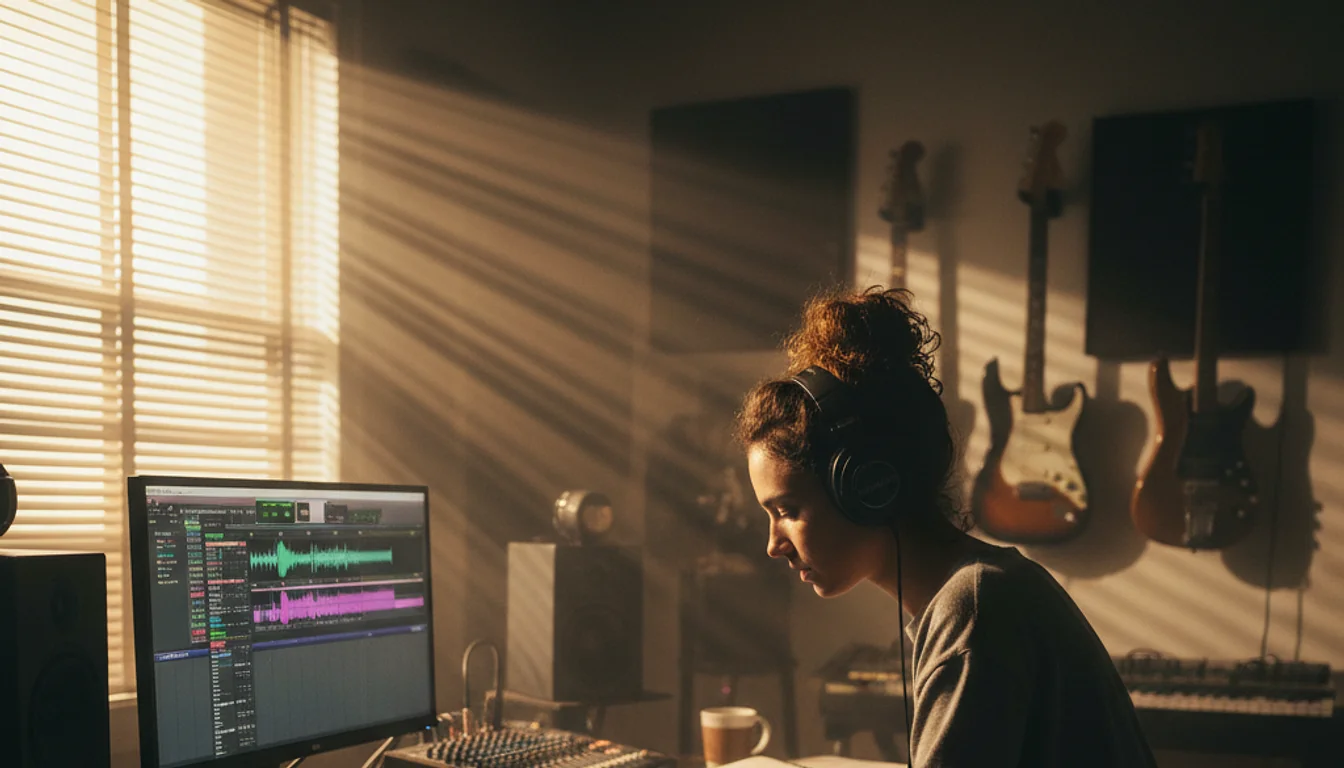
If you’re looking for gear, be careful. I wrote about nourishedlivingtoday. com/. The Four Pillars of Your Home StudioHow should I put it. You don’t need a soundproof booth to start. You need a corner where you feel safe to make bad noises. To be honest, I did my best work last month sitting on the floor because my desk felt too much like “work. “ 1. The Computer (The Brain)You don’t need the newest MacBook Pro Max Ultra whatever. If your laptop can run three Chrome tabs and a Zoom call without screaming, it can probably handle basic music production. I use a 2022 MacBook Air I bought refurbished, and it works just fine for 15-20 tracks. Just make sure you have at least 16GB of RAM. That’s the one thing you shouldn’t skimp on. //www.nourishedlivingtoday.com/wp-content/uploads/2026/01/music_production_12.webp” alt=”music production – relevant illustration” />
|
2. The DAW (The Canvas)This is the software where the magic happens. Think of it like Photoshop, but for sound. Most people start with GarageBand because it’s free on Mac, and honestly, it’s great. I eventually moved to Ableton because I liked the “Session View”—it feels more like playing a game than editing a spreadsheet. It helped me stay in that creative headspace that kept me away from com/2026/01/27/how-i-used-minimalist-living-to-kill-my-burnout-my-honest-2026-guide/” rel=”noopener noreferrer”>minimalist living and burnout recovery . 3. Monitoring (The Ears) Feature You need a way to hear what you’re doing accurately. Don’t use your AirPods. They “color” the sound to make it pretty, which means you won’t hear the mistakes. Get a pair of “flat” studio headphones. I bought my Audio-Technicas at the Guitar Center on Wilshire Blvd, and they changed everything. Suddenly, I could hear that my vocals were way too loud and my drums were hiding in the back. 4. The Audio Interface (The Bridge)If you want to plug in a microphone or a guitar, you need this little box. It converts the analog signal into digital data your computer understands. It’s the most important $150-$200 you’ll spend. I personally love the Focusrite Scarlett because the red color makes me happy, which sounds silly, but environment matters when you’re trying to heal. 💡 Pro Tip Buy your gear used on sites like Reverb or eBay. Musicians are notorious for “GAS” (Gear Acquisition Syndrome) and sell perfectly good, barely-used equipment for 40% off retail prices. How to Actually Finish a Song (Without Crying)The biggest hurdle isn’t the tech; it’s the “middle-of-the-song” slump. My friend Chris, who is a professional drummer, told me that 90% of producers have 500 half-finished loops and zero finished songs. I was that person for months. I’d get a beat going, love it for ten minutes, then decide it was trash and delete it. To break this habit, I started using the “Timer Method. ” I give myself 20 minutes to lay down a drum beat, 20 minutes for a melody, and 20 minutes for a bassline. No editing allowed. At the end of the hour, I have a skeleton. It’s usually messy, but it’s there . Actually, this is very similar to how I approached my nourishedlivingtoday. com/2026/01/26/i-healed-my-burnout-with-canvas-why-fine-art-is-my-2026-secret-to-mental-clarity/” rel=”noopener noreferrer”>healing through fine art —focusing on the process rather than the perfection of the final product. Step-by-Step for Your First Session
| Label Your SectionsMark where the Intro, Verse, Chorus, and Bridge are. This stops you from getting lost. Start with the “Heartbeat”For most, this is the kick drum and the snare. Get a rhythm that makes your head nod. Add the “Soul”This is your melody or vocal. Don’t worry about the lyrics yet; just hum if you have to. The 80% RuleOnce the song is 80% good, call it finished. The last 20% takes forever and usually kills the vibe. 💰 Cost Analysis
Service
$20.00
DIY Learning
$0.00
Professional Studio
$500.00 Key Takeaways
The Downsides: What Nobody Tells You
|